

A mother walks into a room expecting it to be strewn with chicken feathers and finds, instead, hundreds of blood-soaked sanitary pads. Surely she concludes the devil has taken hold of her son and sets out to have him declared insane.
A woman finds her husband loitering outside the women’s hostel of the local medical college. Surely she assumes an affair and demands a divorce.
A man wears a sanitary pad and rigs up an artificial bladder filled with animal blood to recreate the discomfort a woman feels during her period.
That is the portrait of Arunchalam Muruganantham, a resident of Coimbatore in the southern Indian state of Tamil Nadu. Though he calls himself poorly educated, he has achieved a great deal through his inventive, low-cost machine for producing cheap sanitary pads for rural women. He sees the project as a movement rather than a commercial venture, and it has taken root across India and in a number of other countries.
The story began in 1998, when Muruganantham discovered that his wife was hiding the dirty rags she used during her period. Asked why she used rags, she explained that everything was already known about pads – but that if every woman in the household began using them, the family would have to trim its monthly milk budget.
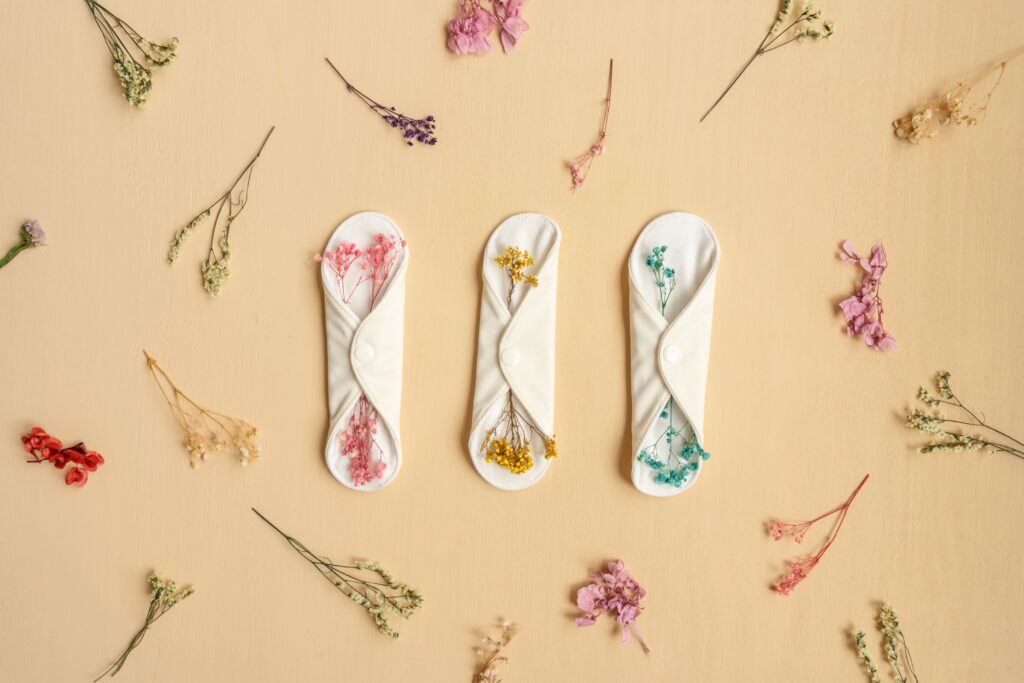
In India and other developing countries, menstruation can shut women out of opportunities and even prove deadly. Girls and women without access to affordable pads are left to choose between staying home and using old rags or leaves that can cause reproductive-tract disease. According to a government survey, only 12 percent of Indian women use pads. Muruganantham believes that among the rural population the figure may be as low as 2 percent.
Having dropped out of school, he started his working life as a welder at a small factory, which he later bought from his employer. His goal now was to find a solution for his wife and for other women. He went to a shop and bought himself dozens of sanitary pads. He reflected that hardly any man in the world had ever picked up a sanitary pad before, since it was simply not seen as a man’s concern, yet this became his life’s work.
He tore one pad apart to understand how it was made. Then he needed a volunteer. He thought of his wife, of course, but one woman was not enough. “Getting it all right would take decades,” he said. When he asked his sisters to help, they threw him out of their homes. So he steeled himself and began loitering near the local medical college, hoping that trainee doctors would prove more open to his “improper” request. He soon found that even the female medical students wanted nothing to do with the experiment.
So he started wearing a pad himself. He could not work out why the animal blood he used leaked everywhere while the pad failed to absorb it. That was when he learned that the answer lay in a special cellulose made from pine wood.
“The wood cost pennies but sold for pounds,” he said. The difference came down to the fact that the industrial machine for producing branded pads cost around US $575,000. Muruganantham set about building something smaller and cheaper – a machine that would grind, break into fibers, press and sterilize the pads before packaging them for sale. His mini-machine sells for under US $2,000, which means the pads can be sold for roughly a tenth of the price of branded equivalents. It works straight from a living-room countertop and removes any need to build a factory.
He named his company Jayaashree Industries after the sister who secretly lowered packages of food from her window during the period when the community shunned him. Around that time she gave birth to a daughter, Jayaashree, whose name means “victory.”

When it came to making and promoting the invention, the Indian government proved no help, and competing with the advertising budgets of multinational brands was beyond him. But luck intervened: in 2006 the Indian Institute of Technology in Madras (Chennai) registered his machine with the National Innovation Foundation for its Grassroots Innovation award. He won. Suddenly the world took an interest in his product, and serious capital arrived.
Today the machines can be found right across rural India, turning out regional pad brands with names like Relax or Be Cool. They have not only helped millions of women move from unhygienic periods to cleaner, healthier days, but have also created jobs and income for the rural women who operate them.
In Muruganantham’s world, all is well again. His estranged wife called him soon after she realized that he had not, in fact, been chasing students. His mother came back to him. And he broke through one of rural India’s most stubborn prejudices – the belief that women who use sanitary pads are brides of the devil. Now teenage girls can go to school every day, and no one needs to ever know when they have their period.
Comments are closed